Showing posts with label communications. Show all posts

Thursday, April 17, 2014

23 Reasons Not to Talk to Strangers? Or...

...Little Red Riding Hood?

My friend and former colleague Eric Pelletier blogs in a wonderful post, Croissants and fairy tales. How storytelling makes strategy happen that
...when people in a similar context, are exposed to the same facts, they tend to arrive at the same conclusions. And so, when they're in the same organization then, they're also likely to arrive at the same conclusion about the right strategy to take the organization forward.
While he focuses on the power of getting people on board via storytelling to implement strategies, I have little doubt he'd agree about the power of creating shared conclusions on formulating a winning strategy in the first place.

In The Biggest Problem in Strategy? Mindset, I noted how the railroads in post war America missed out on growth opportunities because they saw themselves in the railroad business, not the transportation business, and how Blockbuster missed out on digital distribution, ignoring intelligence on the looming threat. While railroad efficiency made enormous strides post deregulation in 1980, it basically kept the surviving companies in the game. Rail's share of freight traffic in the US (measured in ton-miles) declined from about 75% in 1930 (A Short History of US Freight Railroads, pp3) to 28% in 2000 (Freight-Rail Bottom Line Report, pp 14). Worse, its share of freight revenues dropped to a mere 6%. Blockbuster went bankrupt in 2011, shuttering the last of its outlets in 2013. Other examples of failed strategies aren't hard to find: cell phone manufacturers Nokia and Motorola; bookstores Borders and Barnes and Noble; computer manufacturer Sun; the plethora of desktop application software firms - remember VisiCalc, Lotus 1-2-3 and Freelance Graphics and WordPerfect, all of which dominated at one time?

Storytelling works because of the evolution of the prefrontal cortex of the human brain, which helps us recognize and act on patterns. It also works, as Eric notes, because it creates a shared context, or "experience" (even if vicarious) in the tribe. 

But this pattern-recognizing ability is both a help and a hindrance, for individuals and groups. It helps tremendously when the situation is reasonably stable, but often fails us in times of significant environmental change, when we are unable to recognize new patterns. And the worst failures occur when the "tribe," and especially the decision-making leadership, is unable to jettison outdated mindsets.

The most powerful stories are the ones collectively arrived at, through shared experiences. And the most powerful of these are crises. IBM (where I worked for the better part of a decade), was able to reinvent itself in the early 1990s because the tribe members (the employees) knew there was no other choice, enabling Lou Gerstner to drive a change in the collective mindset. But it was painful, to the tune of 200,000 layoffs.

So I return to a theme readers of my blog will recognize: why not create simulated "crises" to enable decision-makers to "experience" the consequences of potential actions. Militaries, governments and airline pilots (see Chance Only Favors Prepared Minds) do this regularly. And some companies regularly incorporate scenario planning or business wargaming (among other experiential planning techniques), designed and facilitated by experts for maximum effectiveness, into strategy development.

Companies that invest in these now, incorporating the latest available intelligence on potential opportunities or threats, reap huge future returns and often avoid debilitating disasters.

Monday, November 18, 2013

Avoiding "Surprises"

Early Warning
Early Warning

Had these experienced commanders and executives (see the prior post, "Surprise") known what was coming, they could have redeployed assets and avoided catastrophic “surprises.” Today, of course, we can see that the available information provided sufficient early warning of clear threats - hindsight is 20/20.

But why is it these leaders couldn't see the signs at the time?

In retailing, it is not as if amazon.com and its offshoots were unknowns by the late 1990s. However, the prevailing view of traditional retailers was that marketplace success required opening as many stores as possible to both gain share and blunt competition. These built vast organization structures around site location, logistics, inventory, HR and downstream (promotional) marketing. And the most successful developed sophisticated information systems that reported operational performance variation in increasingly exacting detail. Have a hot selling item in one location? Easy - find excess inventory and load it on the next shipment. Poor performance in another? Schedule a performance review with store management to isolate and fix the root cause.

What they didn't have was an information system to warn of emerging strategic threats. No doubt these executives received information about the impact of Internet business models. But, unlike the internal information, it was unstructured, arriving initially in dribs and drabs. By the time clear trends emerged, the successful early Internet movers had learned from their mistakes and established defensible niches.

Caught in the daily exigencies of running an enterprise, these leaders simply weren't programmed to evaluate the nature of the available early warning intelligence within the context of their brick-and-mortar operational mindset and information expectations. And, eventually, when they did assess the threat, they were constrained by the amount of investments required to overcome the first-mover advantage, which would have required diverting significant resources from successful operations.

Waiting until information is absolutely certain (right hand side of the chart) results in a crisis, forcing leaders to rapidly rethink critical assumptions: maintaining outdated mindsets when bombs are falling or bankruptcy looms is suicidal. But it may be too late: they have very little flexibility in how to respond – you can’t re-position a fleet immediately or turn a brick and mortar operation into an e-commerce one overnight.

On the other hand, way back in relative time (the left hand side), leadership has more leeway in deciding where to deploy assets. However, the uncertain and often conflicting information makes it difficult, if not impossible, to challenge the existing organization mindset.

Avoiding “surprise” requires speeding up the processing of relevant information, moving the information certainty line upward and the intersection of the two lines to the left, when there is more decision-making flexibility.

Creating the intelligence necessary to challenge assumptions earlier requires choice and focus – every startup or new technology is a potential threat. And, perhaps perversely to some, the solution is not simply amassing and sorting through vast amounts of data. 

It requires asking the right questions.

Next: You Can't Find What You're Not Looking For

Wednesday, November 6, 2013

Make Haste Slowly

Effective Communications Briefs

Once you've developed a differentiated value proposition, you've got to communicate it to the target audience, using powerful language and visuals. You've got to find out where that audience “hangs out” – what television programs they watch, what magazines they read, what radio stations they listen to, what social media they follow and where they spend their time online.

Creating a winning (and by winning, I mean winning in the marketplace, not winning awards) marketing communications program requires a team of specialists: communications strategists, copy writers, graphics and layout artists, media buyers and, increasingly, social media specialists, often found in marketing or communications agencies.

How well your awareness-building initiatives succeed depends on your ability to harness the full power of these talented individuals. A good agency won’t start work without a good brief, which ensures that their team stays focused on your objectives. But developing a good brief takes time and hard work, and if you leave most of the effort to the agency, not only will you receive a hefty bill, but you and your internal non-marketing clients may become frustrated with the process. Plus, leaving it to the agency risks that they will only work with the marketing department, losing you an opportunity to engage with key business stakeholders.

The solution: create your own brief, which gives you the opportunity to harness the best thinking of your organization’s talent, and not just the marketing team. Here are some guidelines:
  1. Start with your market insights. What's the big picture? What's going on in the market? What are the opportunities or problems in the market?
  2. Who is the campaign talking to? The more precise and detailed the better. Describe demographics, firmographics and psychographics. Explain how the audience currently thinks, feels and behaves in relation to the product category, your brand, and your specific product or service.
  3. What is the objective, the purpose of the campaign? A concise statement of the effect the communication should have on customers. Typically expressed as an action, focused on what the communications should make them think, feel, or do.
  4. What's the most important thing to say? What's the single most compelling statement we can make to achieve the objective? This should be a simple sentence and certainly no more than a few sentences if absolutely necessary. Avoid generalities.
  5. What are the supporting rational and emotional reasons to believe and buy? Explain why the customer should believe what we say, and why they should buy. Include all the major copy points, in order of relative importance to the customer. It is also helpful to include other information the agency might need, such as a description of the brand personality, positioning tag lines, creative thought starters, terms of direct response offers, result expectations, and mandatory elements such as the logo and Web address. 
  6. What do we need from the agency team? And when do we need it?
Finally, make haste slowly. While it takes an effort to collaborate across internal functions who don’t speak marketing, engaging them in the process as trusted advisors (with marketing doing the heavy lifting) will increase both understanding and buy-in.

Don't squander this opportunity.

Friday, October 25, 2013

Don't Talk About Marketing

Marketing Strategy and Planning

Many marketing plans look somewhat alike: executive summary, situation analysis, SWOT, objectives, marketing strategy, action plan and financials, with assorted appendices.

And most are equally ineffective.

The biggest deficiency is the lack of a business case: what business results will occur, and for what cost. This is not easy (see the post Meaningful Metrics), often because of the difficulty of proving, for example, the impact an awareness-building initiative had on sales. But building the business case is an absolute must.

It starts with the company objectives. Are you pursuing organic growth? If so, how? By expanding the customer base for current products, increasing sales to existing customers, or entering new markets? Then (yes, this is simplistic, my apologies), how will each marketing initiative support the objective?

Take increasing sales to existing customers. One organization, with two distinct offerings, wanted to increase cross-sales into accounts where one offering dominated. The challenge was that not only did the account executives not know enough about the other offering to create selling opportunities, they didn't know who in the organization to talk to. Marketing got sufficient funding by working with sales to agree on account penetration objectives and identify what programs and investments were needed to "open new doors" (offerings education, easy-to-use collateral and reference-selling coaching).

In another case, the "objective" was to increase sales, based on the assumption that was the only way to increase profits. The research marketing then unearthed a critical insight: consumers saw multiple benefits to the product that were not being communicated. This led to a new communications strategy that both increased unit profits as well as unit sales.

These plans succeeded - that is marketing got the budget it needed - because they focused on business results. The material that makes up many typical marketing plans was available during the strategy discussions, but not "presented" - when the rest of the business leadership team asked specific questions, the marketing team knew the answers.

As Andy Berndt, Head of Google's Creative Lab says, “my advice to marketers is don’t talk about marketing. Bring the CEO ideas that can make the business better or solve a problem.”*

*"What Do You Want From Me: How High-Performing CMOs Exceed Expectations," Spencer Stuart, November 2010


Wednesday, October 16, 2013

Day 91

The next nine months.

Phew.

Day 90 has arrived, and you've successfully managed the transition. Take a break, have a nice relaxing dinner and don’t think about what’s next.

Until day 91.

Now is the time to consolidate and build on the successes you've created in the whirlwind. You've got your team in place, you've begun building coalitions and know what has to be done. What you do next will ensure your success through the next two years.

Says Karen Masullo, EVP Social Media, Firestorm, now’s the time to “work really, really hard. There’s no room for laziness in marketing. If I don’t drive actionable items to the sales team, I’m not doing my job. Never get too complacent. You have to take a stand. Stick to your guns – you’re working with senior leadership, and you must give them your best insights and recommendations. Finally, your responsibility is to unify senior teams, especially technical teams. You need to know everything about the company.”

Visa Global Chief Marketing, Strategy and Corporate Development Officer Antonio Lucio, who has beat the average, says the secret to longer CMO tenure is simple: “You have to be effective and deliver strong business impact.” He’s been able to stay in his role by delivering against three parameters: business results, brand results and broader organizational impact. CMOs who last, he says, have an impact as leaders that has “probably been felt more broadly than in just the marketing agenda."*

Pete Krainik, Founder and CEO, The CMO Club, who’s held a variety of CMO and senior marketing positions at M&M/Mars, Avaya and DoubleClick says “Focus all your energies in things that help build relationships with customers – everything else is just noise. It is easy to get caught up in all the other stuff.” And never forget that “execution determines success. Great ideas without execution don’t matter.”

“Listen,” says Gary Slack, Chairman, Slack and Company. “Go see customers, after you've spent time with the rest of the company. Get to know your staff. Work hard on relationships with peers. Talk to prospects and to defectors. Develop a deep understanding of customer awareness, attitudes and perceptions.”

Next: What Have You Done for Me Lately?

*Rooney, Jennifer, “Average CMO Tenure Hits 43 Months,” Forbes, CMO Network, June 14, 2012.

Monday, October 14, 2013

Where Do You Start?

The first 90 days.

“The first thing you should do is read, or re-read, the book The First 90 Days*,” says Nigel Dessau, CMO of Stratus Technology and ex-CMO of both AMD and StorageTek.  “In the first 30 days of any new job I've taken, I gather data, qualitative and quantitative. I’m not choosy, at first. I meet with as many people as I can, and then review every night for what I've learned. From that I come up with six focus areas, two of which are most likely going to be people and budget. Then I sit with the leadership team and discuss. And then I discuss with my marketing team, to get alignment. What ensues becomes my plan for the next several years, which is the average tenure of a CMO."

Let’s go to the source: “The actions you take during your first three months in a new job will largely determine whether you succeed or fail, ” writes Harvard’s Michael Watkins, author of The First 90 Days. “The stakes are obviously high. Failure in a new assignment can spell the end of a promising career.”

Sobering.

Luckily for us, Watkins has researched the success and failure of new executives and offers a checklist of things you need to do :

  1. Promote yourself. No, don’t hire a publicist. Mentally accept that you've been promoted into a new position that will require different skills than what’s made you successful in the past.
  2. Accelerate your learning. Go into learning overdrive – spend as much time as you can reading about markets, product, technologies, systems and structures, and especially the company culture and politics.
  3. Match your strategy to the situation. Start-ups are quite different than product line turnarounds which are quite different from new market entry situations
  4. Secure early wins. This may be the most important thing you can do: nothing succeeds like success. It builds personal credibility.
  5. Negotiate success. Your new boss thinks you’re the right person for the job, but isn't totally sure yet. Schedule time, weekly, to go over your assessment of the situation, his or her expectations, reporting style and the resources you will have available.
  6. Achieve alignment. With each promotion, you’ll find that you “do” less and have to “get more done.” The only way to achieve this is to align, or re-align, the structure with the strategy
  7. Build your team. Evaluate the team early and, if necessary, make tough calls. You can’t afford to depend on non-performers.
  8. Create coalitions. More important jobs increasingly depend on your ability to influence people who don’t report to you. Make them your allies, and you succeed. Make them your enemies, and you fail.
  9. Keep your balance. You’ll be drinking from a fire hose – you’ll find that the demands on your time are more than there are hours in the day. Find ways to keep your perspective and don’t be rushed into making risky decisions.
  10. Expedite everyone. Bosses, peers and especially direct reports – the quicker you can get everyone up to speed, the better your performance will be.
Even - or maybe especially - if you've been in your job for some time, this is sound advice. Take some time to mentally promote yourself into that next position and contemplate what it would take to succeed. Then, follow these steps as if you were already in the position.

You may get that promotion faster than you think.

Next: Day 91

*Watkins, Michael, The First 90 Days, Harvard Business School Press, 2003


Wednesday, October 9, 2013

Insource or Outsource

First Things First discussed the first of five key things the CMO must do well*, getting the marketing mandate right. Allies, Agnostics and Antagonists focused on the second, building meaningful relationships with functional and business leaders. Meaningful Metrics addresses agreeing on how to measure success. 

The fourth focuses on collaborating with external partners.

Once you've got measurable objectives in place, you need to determine how to accomplish these objectives. You’ll need to carefully evaluate the capabilities of your staff against those objectives and then determine whether to retrain, hire or seek outside assistance.

Luckily for you, marketing may be the most outsourced function in business. There are a plethora of advertising, brand, marketing communication, marketing strategy, public relations, demand generation, digital marketing, marketing research, print and social media agencies, all of whom provide specialized skills that few but the largest of marketing organizations can afford to keep on staff.

How you manage these firms can make or break your success.

First, determine exactly the type of help you need. For this, you need to be very, very clear on what needs to be done. There are subtle but important differences in the types of firms and the types of personnel they hire. Many of them, like your organization, look to expand their offerings to meet the needs of their clients. Some of these expansions make sense, but only if they deliver real results and, importantly, provide real experts. I, for example, am immediately skeptical of the branding firm that launches a PR or social media offering, which require different skill sets than their core business.

Therein lies the key. You’re not hiring an agency; you’re hiring people and a culture. 

Says Maureen McGuire, CMO of Bloomberg, “there may not be a major difference between what the different agencies do, but the team that is working on your business will be different. The chemistry that you build with that team and their ability to get fired up about what they’re trying to do and bring in new ideas is what counts.”*


Next: You're Not an Island

Thursday, May 30, 2013

Most Growth Programs Fail - Part II

Most growth programs fail because they require changes to strategy. And changes to strategy nearly always require changes to the organization: new tasks must be defined, new skills built, a new culture must be nourished and leadership must be aligned up and down the hierarchy. Inattention to these increases the odds that a promising strategy delivers disappointing results.

In addition, many companies aren’t fully aware of how far they must go to differentiate new products or offerings. Effecting these changes requires building commitment on the part of those charged with driving the growth initiative.

Building the necessary commitment begins with the creation of a collective understanding of changes in marketplace dynamics: evolution of customer defined value, technology changes, channel shifts, and new competitive strategies. It strengthens as the team jointly assesses and selects the opportunities, builds a robust strategy and identifies the necessary organizational changes. It solidifies as the team identifies the key elements of a go-to-market plan that creates the platform for sustained performance. And the commitment becomes action through follow-up monitoring.


Wednesday, September 19, 2012

Friday, September 14, 2012

A cardinal sin

I (try to) regularly attend a variety of Meetup (*see below for a description) groups, for learning and professional and social networking. Basically, you can find a group of people who have similar interests: books, kids, art, food, sports - something for almost everyone.

Mostly, I appreciate deeply the effort of the organizers, and I have no issue if they personally benefit.

What I abhor, though,

Thursday, August 9, 2012

Robotic brand behaviors

By now most marketers (effective ones, anyway) have moved beyond a Mad Men "brand = logo (or advertising - read From Mad Man to Superwomen) view of the world, and are focused on behaviors.

And with good reason. Viewing marketing as communications (only) is like viewing sales as cold calling or finance as accounting - necessary, but no where near sufficient. A logo or ad may catch your attention, but the customer experience results in the sale, and repeat business. Great companies define and build the experiential aspects of the brand into everything they do, creating a competitive advantage that can't be replicated.

But there is a fine line between definition and prescription.

Thursday, August 2, 2012

Picked especially for you...

Increasingly, I get eblasts that start "Picked especially for you..."

Amazon made this popular, and I still enjoy its missives, because it actually has made picks for me, based on sophisticated algorithms. I don't always buy, but I am always interested in learning about new books that may be an enjoyable read.

Thursday, July 26, 2012

Listening

We'd heard about a nice local deli, and stopped in to see the offerings.

Greeted with a smile, we asked about their prepared dishes, particularly vegetarian ones which, unfortunately, were on the sparse side. Because the store came with high recommendations, we persisted in our questioning.

Until the clerk offered us a sampling of the store's meatballs, something they were well known for.

Huh?

Tuesday, July 24, 2012

Movie theaters

Movie theaters should be dead.

Yet, the latest statistics from the MPAA show international box office receipts are up 35% over five years ago and even US receipts are up 6% over the same period. This despite the fact that a ticket costs more than a monthly subscription to NetFlix, which many can watch on home systems exceeding the sound and video quality of the theater.

And yet the movie theaters are packed. Why?

Thursday, July 12, 2012

What's a smile worth?

I stopped at the local Fresh Market for a piece of fish for dinner.

While the prices are a little higher than the competing local supermarket, I go there often, for a variety of reasons, including the quality of the fresh produce, meats and seafood, the selection and the deli.

Friday, July 6, 2012

Everyone lives by selling something...

...said Robert Louis Stevenson, author of Treasure Island and the Strange Case of Dr. Jekyll and Mr. Hyde.

Sales reps, of course, sell products and services to customers.

CEOs sell their vision to their boards and employees.

CIOs sell their plans and budgets to the management team.

CFOs sell the company's investment plans to Wall Street.

CHROs sell the benefits of working in an organization to prospective employees.

Inventors sell their ideas to investors.

And CMOs must help sell all of these.

All require an in-depth understanding of both the offering and the buyer.

What are you selling?

And have you done the hard work to develop the insight required?

Experience matters.


Monday, July 2, 2012

Why I'll go back

Despite arriving on time for our reservation, we were told we had to wait. A bit annoying, since we could see a couple of open tables. The host then directed us to the bar, where the bartender, of course, asked if we wanted a cocktail, which we declined. Within the space of a minute, our anticipated pleasant evening was going downhill - I'm thinking typical restaurant trick, trying to eke out an extra couple of dollars from a patron. But then my attitude changed.

Sunday, June 6, 2010

Life or death communications: lessons from Lord Nelson


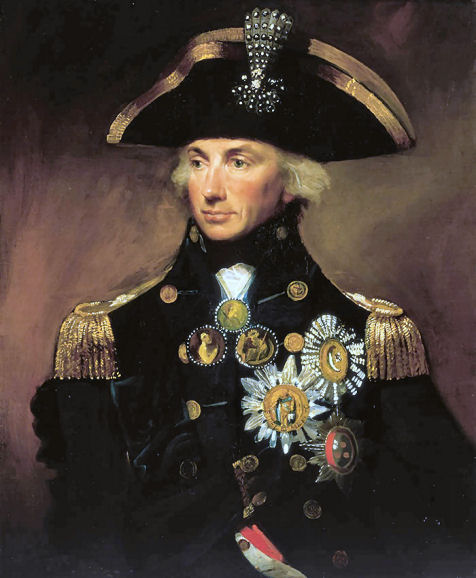
Lord Horatio Nelson
For several decades now, I've been a student, observer and participator in strategy (corporate, branding and marketing) and organization - getting these right is, of course, critical to success. But I've seen many cases where carefully prepared plans and their support structures have not resulted in the desired results.

Reading To Rule the Waves, a gripping history by Arthur Herman, I was struck by the role communications played in two Royal Navy engagements, 25 years apart, each of immense strategic consequences: Yorktown in 1781 and Trafalgar in 1805.
Communications dictated the outcome of each, one a failure that lost a continent and one a victory that established naval pre-eminence for more than a century. The lesson: everyone in the organization must understand what needs to be done for a plan to be successfully executed.
Trapped by the French fleet

Yorktown

In late 1781, "a British army under General Cornwallis had been driven back across Virginia to Yorktown at the mouth of the James River. A French squadron of 26 ships of the line under Admiral de Grasse had cut off Cornwallis. The North American [British] squadron under its new commander Thomas Graves had come down into the Chesapeake Bay to drive de Grasse away; at Virginia's Cape Henry the fleets joined battle on September 5."

It was a fight the British should have won. Grave's subordinate, Samuel Hood, wrote to [Lord] Sandwich, 'Yesterday the British fleet had a rich and most delightful harvest of glory presented to it, but omitted to gather it." Instead, a confusion of signals (Graves had run up the signal for close action at the same time as the flag for keeping the line of battle), and de Grasses's skill in avoiding a more decisive engagement cost Graves the battle and sent him back to New York. By the time he returned, Cornwallis had surrendered. The American War of Independence had been won and lost."

Within a decade, however, the British Navy would introduce a new communications system so revolutionary that it would change the way naval battles were fought, and result in a victory so decisive that Britain would would dominate the world's oceans for over a century.

Historically, admirals could communicate with their captains by the placement and color of flags raised and lowered from the flagship's (hence the name...) masts. Unfortunately, the captains couldn't communicate back and, worse, the admiral couldn't change plans in the heat of the battle. That changed in 1790, when

Richard Howe introduced a new numerical system for signalling his captains, with 10 flags of standard pattern and color (the basis of the International Code of signals still used by ships today). They could now be used in combination to form more than 260 separate messages, from the admiral to his ships but also now from his ships to the admiral. There was even a signal for telling the admiral his signal had been seen and understood, resolving a confusion that had plagued every naval commander since the Spanish Armada - and which had lost Britain the battle of the Chesapeake, and the American Revolution.

Trafalgar

The Treaty of Amiens, signed in 1802, had two results: it ended the the hostilities between France and Britain during the French revolutionary war and, more importantly, made Napolean the military master of the continent of Europe. Only Britain stood in the way of his perceived destiny.

So when, inevitably, war with Britain resumed in May 1803 (the pretext was Britain's refusal to evacuate Malta as promised), Napolean focused his energies on the achievement that had eluded everyone since William the Conqueror: the invasion and defeat of Britain...Like Philip II two centuries earlier, he summoned all the resources of his continental empire. Napolean assembled at Boulogne the battle-hardend veterans of a dozen campaigns into a force of 160,000 men, which he dubbed the Grand Army. He poured over maps and chose the location for his beachhead lading: the northeast coast between Deal and Ramsgate, where his invasion force could anchor in the Downs in the shelter of the Goodwin Sands. He had his engineers design special boats that could get across the Channel in a dead calm.

HMS Victory at Trafalgar
The only obstacle was the Royal Navy, and in particular the Mediterranean fleet under the command of Horatio Nelson, and his flagship, Victory, which would become the most famous man-of-war in British history.  His goal was "'to keep the French fleet in check, and if they out to see, annihilate him.' To do this, Nelson would use a new kind of blockade, not close but loose - so loose, in fact, that it might tempt the French to break out and then fall into his trap. He had a tool to help him: the new navy signals." By 1799 the Admiralty had adopted and expanded the system to more than 340 messages, giving an admiral unprecedented tactical control.

Over the next two years, British and French naval forces played a game of cat and mouse in the Mediterranean, Atlantic and Caribbean, each trying to gain an advantage that would seriously cripple the other. In September 1805, Admiral Pierre de Villeneuve, commander of Napolean's fleet, was preparing to go to sea from Cadiz, Spain to try to secure the English Channel when an order arrived from Napolean: his enemies were gathering in central Europe and the fleet now needed to return to the Mediterranean to land troops and supplies in Naples. As the French fleet set sail on October 19,

The [British] frigate Sirius was the first to spot them. It immediately sent the news on to Blackwood's Eurylalus [using 26 flags: 'To Eurayalus: Enemy have their topsails hoisted.'...which] relayed the message on to the next frigate, the Phoebe, and so on until it reached the Mars 48 miles away. Lt. William Cumby of the Bellerophon then caught the Mars signal; his captain was planning to dine with Nelson on the Victory that very morning. Now Captain Cooke had more exciting news to pass on to his commander in chief: the French were coming.

Two days later, the enemy fleets engaged and the British won a decisive victory that, in their minds, buried any chance of Napolean's invasion of England, even though it was later learned that he had called off the invasion. However, the victory did ensure that Britain would remain unchallenged as it established control of the oceans for the better part of the next century. While tactics, bravery and luck - good and bad: Nelson lost his life - played an important role, as in any armed conflict, the ability of the British fleet to act swiftly on intelligence that would not have been able to be communicated a decade before was crucial.