Showing posts with label intelligence. Show all posts

Sunday, April 20, 2014

Smart is Dumb, and..


...dumb is smart.

I was reminded of the importance of what I read about years ago in the best-selling negotiating guide, Getting to Yes, watching TURN, AMC's new drama about America's first spy ring in the American Revolution. In episode two, a Captain in the Continental army charged with creating the spy ring, serves dinner to a captured British Captain in a gesture of apparent civility between officers. At the end of the meal, the British Captain, wishing to reciprocate, gives away the exact information the the Continentals needed. The dialog:
British Captain: "Now then, to business. What is it you wish to know?"
American Captain: "Oh nothing, sir. We already know all we need to know."
BC: "Truly? You know where we mean to strike after retaking New York?"
AC: "We know you have four thousand men stationed at Throgs Neck in Brooklyn, New York, as part of your occupation force."
BC: (incredulously) "Four thousand??? (derisive snort) Try six!"
Good information is critical to success, whatever your decision-making endeavor - military, negotiations, strategy, marketing, sales... And, it requires careful planning to obtain, and validate.

Just don't let your ego get in the way.


Thursday, April 17, 2014

23 Reasons Not to Talk to Strangers? Or...

...Little Red Riding Hood?

My friend and former colleague Eric Pelletier blogs in a wonderful post, Croissants and fairy tales. How storytelling makes strategy happen that
...when people in a similar context, are exposed to the same facts, they tend to arrive at the same conclusions. And so, when they're in the same organization then, they're also likely to arrive at the same conclusion about the right strategy to take the organization forward.
While he focuses on the power of getting people on board via storytelling to implement strategies, I have little doubt he'd agree about the power of creating shared conclusions on formulating a winning strategy in the first place.

In The Biggest Problem in Strategy? Mindset, I noted how the railroads in post war America missed out on growth opportunities because they saw themselves in the railroad business, not the transportation business, and how Blockbuster missed out on digital distribution, ignoring intelligence on the looming threat. While railroad efficiency made enormous strides post deregulation in 1980, it basically kept the surviving companies in the game. Rail's share of freight traffic in the US (measured in ton-miles) declined from about 75% in 1930 (A Short History of US Freight Railroads, pp3) to 28% in 2000 (Freight-Rail Bottom Line Report, pp 14). Worse, its share of freight revenues dropped to a mere 6%. Blockbuster went bankrupt in 2011, shuttering the last of its outlets in 2013. Other examples of failed strategies aren't hard to find: cell phone manufacturers Nokia and Motorola; bookstores Borders and Barnes and Noble; computer manufacturer Sun; the plethora of desktop application software firms - remember VisiCalc, Lotus 1-2-3 and Freelance Graphics and WordPerfect, all of which dominated at one time?

Storytelling works because of the evolution of the prefrontal cortex of the human brain, which helps us recognize and act on patterns. It also works, as Eric notes, because it creates a shared context, or "experience" (even if vicarious) in the tribe. 

But this pattern-recognizing ability is both a help and a hindrance, for individuals and groups. It helps tremendously when the situation is reasonably stable, but often fails us in times of significant environmental change, when we are unable to recognize new patterns. And the worst failures occur when the "tribe," and especially the decision-making leadership, is unable to jettison outdated mindsets.

The most powerful stories are the ones collectively arrived at, through shared experiences. And the most powerful of these are crises. IBM (where I worked for the better part of a decade), was able to reinvent itself in the early 1990s because the tribe members (the employees) knew there was no other choice, enabling Lou Gerstner to drive a change in the collective mindset. But it was painful, to the tune of 200,000 layoffs.

So I return to a theme readers of my blog will recognize: why not create simulated "crises" to enable decision-makers to "experience" the consequences of potential actions. Militaries, governments and airline pilots (see Chance Only Favors Prepared Minds) do this regularly. And some companies regularly incorporate scenario planning or business wargaming (among other experiential planning techniques), designed and facilitated by experts for maximum effectiveness, into strategy development.

Companies that invest in these now, incorporating the latest available intelligence on potential opportunities or threats, reap huge future returns and often avoid debilitating disasters.

Wednesday, February 5, 2014

Will Your Assumptions Cost You $24 Billion?


As I passed a shuttered Blockbuster store, one of the last to remain open, I wondered what assumptions its executives used to guide their decisions.

Blockbuster filed for bankruptcy in 2011, closing its last stores in 2013, in the face of competition from Netflix, Vudu, Hulu, Amazon.com and the cable / satellite providers. Dish Network bought Blockbuster's streaming service from the bankruptcy court for $321 million. In contrast, Netflix' market cap is worth over $24 billion today - and Blockbuster could have bought it in 2000 for a mere $50 million.

The Blockbuster executives didn't fail from a lack of market intelligence. NetFlix was founded in 1997 and began video streaming in 1999, followed by Vudu in 2004 and Hulu in 2007. And Blockbuster didn't even enter the DVD-by-mail business until 2004, long after Netflix had proven its success. Forbes blogger George Anderson wrote in Blockbuster Beyond the Grave:
“The fascinating issue for me is that Wayne Huizenga and his executive team were well aware of the risks from digital distribution of media and discussed it at times,” wrote loyalty marketing expert Bill Hanifin in a recent RetailWire online discussion.
Given their lack of action, they clearly operated under two critical - fatal - assumptions: not only would the near-term future be like the present, but also that they would have enough time to respond to a "real" competitive threat, before a crisis hit. But by the time it did, it was too late.

We all have assumptions, of course. They help us interpret the barrage of new information we are bombarded with daily. And they work, so long as underlying conditions remain the same. But all assumptions are susceptible to cognitive bias, particularly anchoring, where humans rely too heavily on the first piece of information they receive, using that as the basis for subsequent decisions.

But assumptions often fail us in times of radical change, when they need to be tested to ensure continued validity. Unfortunately, senior executive decision makers are the most resistant to challenging their assumptions. Because of their long years of experience, they "know" the business, the customers, the competitors, the technology and the industry. In turn, this leads them to lend more credence to facts or information that reinforce their world view (confirmation bias).

Given human nature, changing long- and deeply-held assumptions requires a crisis. As English author Samuel Johnson said, "nothing so focuses the mind as the possibility of being hanged in a fortnight."

But rather than awaiting a real crisis, forward-looking organizations create "crisis" experiences, where decision-makers collectively evaluate intelligence, develop new insight and assess the strategic and operational risks of changing customer needs, new forms of competition, changing technologies, new discoveries and emerging government policies, in structured situations.

They can then decide to weigh anchor - or even break the chains - and navigate to a new destination, before the storm hits.

Friday, December 13, 2013

How Good Are Your Marketplace Insight Capabilities?

Since posting Insight is Where the Game is Won and Lost, many have asked "how can we assess our insights capabilities to identify where to focus?" Building on both internal work I did in the early 2000s, and an article published independently by Herring and Leavitt in 2011,* here is a framework you can use to quickly evaluate your organization's insights capabilities. There are five dimensions to rate your organization on (directions at the bottom):
  • Insights culture
  • Sources used to generate the information base to help create insights
  • Marketplace focus
  • Personnel
  • Early warning of emerging threats and opportunities
The organization's culture sets the tone for insights creation, which can address markets, customers, technology or competition. Initially reactive (Level 1), executives ask for data and task available personnel to gather information for a presentation or meeting, invariably sourced from easy-to-access published data, such as annual reports, existing market research or industry analyses. The initial focus is on traditional markets, customers, technology and competitors.

Soon, a frustrated executive or ambitious analyst determines that standardized profiles, newsletters and databases will improve organization awareness. Dedicated, often part-time individuals (becoming full-time as demand increases) standardize outputs, create delivery schedules and expand the fact base to include subscriptions to specialized industry publications, and start to focus on partnerships and alliances which impact growth and the ability to compete (Level 2).

Success begets more challenging questions, such as what does this data mean? how will the trends play out? and what emerging customers, technologies and competitors should we be concerned about? Improving capability requires teams of skilled analysts under a functional manager (Level 3). Since the answers are rarely contained in published data, analysts must incorporate validated opinion and observations from individuals who don't have the time to write it all down - customers, channel partners, R&D and sales personnel, their own executives, and industry observers and experts.

The expanding organizational knowledge base generates new requirements: what are the implications of these projections? what options do we have? what should we do about them? how might customers or competitors react? how feasible is a new technology? Mature organizations assign or recruit a senior leader to answer these, using increasingly sophisticated research and analysis techniques and a well-nurtured source network. And the organization expands its focus to better understand the interactions within the industry value chain and how these will play out (Level 4).

Finally, a radical shift occurs, from an emphasis on producing reports to facilitating dialog: the organization structures insights-driven strategic decision-making sessions (Level 5). Key executives interact directly with well-prepared internal and external experts, to determine how to best position the enterprise for future success. Topics might include identifying and evaluating the strategic risks of potential new initiatives, untapped sources of customer value, the next generation of customers, emerging competitive threats (frequently through business wargames) and new growth opportunities.

The importance of early warning. 


The organization's ability to avoid surprises - a major executive concern - increases with the sophistication of its insights capabilities. Fledgling operations frequently start by looking at any of a variety of "megatrends" (example here), "boiling the ocean" to try to find a something the organization can act on. They progress to tracking studies, targeted assessments of specific marketplace issues and systematic monitoring of the periphery (emerging customers, competitors and technologies). But real breakthroughs occur when organizations form heavyweight teams, consisting of both internal and external experts, to address critical emerging issues through innovation and new business models.

How good is your organization's insight capability? Identify where it is in each category, sum the associated levels, and divide by five. If it is:
  • below 2.0, it is drowning, with little chance of a lifeline in the next round of budget cuts
  • between 2.0 - 3.0, it is treading water, with increasing odds of getting a lifeline
  • between 3.0 - 4.0, the shore is in sight, but beware of undercurrents
  • above 4.0, the beachhead is secured and the insights function is capable of making a real difference
Now ask what will it take to improve? And, importantly, what will be the impact on the business?

* Herring, Jan and Judith Leavitt, "The Roadmap to a World-Class Intelligence Program," Competitive Intelligence, January - March, 2011 

Wednesday, December 11, 2013

Growth is Hard

Columbia Business School professor Rita Gunther McGrath writes that only 8% of the 5,000 companies with over $1 billion in revenues grew sales by 5% annually over a 5 year period, and only 4% grew net income by at least 5% annually.* Compounding the challenge are the prevailing conditions found in many markets:
  • The new product failure rate is repugnantly high: estimates range from a minimum of 40% to as high as 95%; 
  • Few completely new categories have emerged in recent years;
  • Risk aversion results in few real disruptive market strategies;
  • Rivalry is intense and along many dimensions;
  • The role of channels is becoming ever more pervasive and powerful; and
  • Cost pressures continue to escalate, absorbing significant company resources to address.
Companies can beat the odds through a structured approach (chart):
  • Marketplace insight – What is the customer need or problem a new growth initiative will resolve? How have recent competitive and supplier initiatives and technological developments impacted customer needs? What is going on in competitors’ minds, what are they planning, and how will they respond to our initiatives?
  • Opportunity assessment and selection – How can we extend current capabilities to address new opportunities or change the nature of competition? How do we develop and test new growth opportunities beyond our current strategy? Which customer segments will we choose to serve? Which will we not serve?
  • Strategy – How do we resolve a market problem / need in a valuable and differentiated manner? What is the value proposition? How will we capture value, what scope of activities will we perform and how will we protect our profit? 
  • Organization alignment – What processes, systems, structures, and incentives need to be changed? What will inhibit successful execution of the growth strategy: culture, mindsets, resources, incentives?
  • Execution – What specific actions will deliver the product / offering and profitably capture value? How will we measure success? How will we monitor results?
*McGrath, Rita Gunther, “How the Growth Outliers Did It,” Harvard Business Review, January – February 2012

Monday, December 9, 2013

What Role Does Marketing Play in Your Organization?

Is it

Reactive? Does it focus on promoting new initiatives or products developed elsewhere?

Passive? Does it respond to requests for marketplace information to strategy, sales or new product development teams?

Proactive? Does it actively develop marketplace intelligence as inputs to decision-making processes?

A driver? Is it actively engaged in creating new initiatives and developing the necessary insight required for innovative new factor, operational, organizational and marketplace strategies and plans?

Which role should it play?

Wednesday, November 20, 2013

You Can't Find What You're Not Looking For

Ask the right questions

Smoke detectors are programmed for early warning. But they don't detect CO2, equally as dangerous.

With a specific threat - or opportunity - identified, designing a system or capability to capture and process the relevant signals and issue an alert is pretty straightforward.

The challenge for companies is to articulate the potential business threat or opportunity. But in a dynamic marketplace, these are everywhere. Organizations simply can’t monitor every Bill and Dave or Steve and Steve in their garages or Jeff in his warehouse.

It is exacerbated when organizations obsess on collecting reams of customer data or developing in-depth competitor profiles, especially when these focus is on what the customers wanted or what the competitor did. The often-unstated assumption – the mindset – is that the future will be largely like the past and, circuitously, the historical facts support the prevailing view.

But there are no “facts” about the future.

Creating the necessary insight requires asking the right questions:
  • How will new technologies and business value propositions impact our customers, products, services, and business growth?
  • Which industries, customer segments and offerings categories offer the best likelihood of future business growth?
  • Who are the most threatening traditional, emerging and potential competitors? Why?
  • Where are the greatest long-term profit streams according to the capital markets?
  • What is required for future competitive success?
How many organizations have good answers to these questions? How many have the leadership that asks them?

You can’t find what you’re not looking for.

Next: Creating Crises

Monday, November 18, 2013

Avoiding "Surprises"

Early Warning
Early Warning

Had these experienced commanders and executives (see the prior post, "Surprise") known what was coming, they could have redeployed assets and avoided catastrophic “surprises.” Today, of course, we can see that the available information provided sufficient early warning of clear threats - hindsight is 20/20.

But why is it these leaders couldn't see the signs at the time?

In retailing, it is not as if amazon.com and its offshoots were unknowns by the late 1990s. However, the prevailing view of traditional retailers was that marketplace success required opening as many stores as possible to both gain share and blunt competition. These built vast organization structures around site location, logistics, inventory, HR and downstream (promotional) marketing. And the most successful developed sophisticated information systems that reported operational performance variation in increasingly exacting detail. Have a hot selling item in one location? Easy - find excess inventory and load it on the next shipment. Poor performance in another? Schedule a performance review with store management to isolate and fix the root cause.

What they didn't have was an information system to warn of emerging strategic threats. No doubt these executives received information about the impact of Internet business models. But, unlike the internal information, it was unstructured, arriving initially in dribs and drabs. By the time clear trends emerged, the successful early Internet movers had learned from their mistakes and established defensible niches.

Caught in the daily exigencies of running an enterprise, these leaders simply weren't programmed to evaluate the nature of the available early warning intelligence within the context of their brick-and-mortar operational mindset and information expectations. And, eventually, when they did assess the threat, they were constrained by the amount of investments required to overcome the first-mover advantage, which would have required diverting significant resources from successful operations.

Waiting until information is absolutely certain (right hand side of the chart) results in a crisis, forcing leaders to rapidly rethink critical assumptions: maintaining outdated mindsets when bombs are falling or bankruptcy looms is suicidal. But it may be too late: they have very little flexibility in how to respond – you can’t re-position a fleet immediately or turn a brick and mortar operation into an e-commerce one overnight.

On the other hand, way back in relative time (the left hand side), leadership has more leeway in deciding where to deploy assets. However, the uncertain and often conflicting information makes it difficult, if not impossible, to challenge the existing organization mindset.

Avoiding “surprise” requires speeding up the processing of relevant information, moving the information certainty line upward and the intersection of the two lines to the left, when there is more decision-making flexibility.

Creating the intelligence necessary to challenge assumptions earlier requires choice and focus – every startup or new technology is a potential threat. And, perhaps perversely to some, the solution is not simply amassing and sorting through vast amounts of data. 

It requires asking the right questions.

Next: You Can't Find What You're Not Looking For

Friday, November 15, 2013

"Surprise"

December 7, 1941
Nothing frustrates executives I speak with more than a crisis caused by surprise: a new competitor product or unexpected price cut, unexpected loss of a key bid or long-held account, or new technologies or shifts in buyer behavior that obsolete current offerings. And heads roll when these cause a miss in quarterly earnings or, worse, bankruptcy.

The question that always arises is how could we have avoided surprise?

Lack of knowledge is not the problem. “We now live in a world where knowledge transfer and information exchange are tremendously efficient, and where there are numerous organizations in the business of collecting and transferring best practices. So, there are fewer and smaller differences in what firms know than in their ability to act on that knowledge.”*

Said another way, surprise rarely occurs due to a lack of signals. Information on the Toyota Production System was available to the US auto industry for decades, and traditional retailers certainly had time to absorb intelligence on amazon.com’s business model well in advance of having to declare bankruptcy. In the military sphere, “an analysis of surprise attacks suggests that the intelligence community seldom fails to anticipate them owing to a lack of relevant information.” And a US Congressional Subcommittee that examined several critical US political crises pointed out that “in no case had lack of data been a major factor in the failure to anticipate the crisis.”**

Take Pearl Harbor – why did the US navy fail to detect anytime in advance the movement the most powerful fleet in history? It was not as if Japan’s blue water fleet was a surprise – in 1905 it destroyed the Russian Pacific fleet. Nor were Japan’s expansionist intentions a secret – it invaded Manchuria in 1931. And it’s not as if the US Pacific Fleet wasn't concerned about the Imperial Japanese Navy: it knew it was the only real threat to those intentions. Finally, beginning in early in 1941, there was a slew of signals that the Japanese navy was targeting Pearl Harbor.

Given this, “intelligence officers could perhaps have foreseen the attack if the US, years before, had…flown regular aerial reconnaissance of the Japanese navy, put intercept units aboard ships sailing close to Japan…or recruited a network of marine observers to report on ship movements.”***

Did the US Navy create its own surprise?

Next: Avoiding "Surprises"

*Pfeffer, Jeffrey and Robert Sutton, The Knowing-Doing Gap, Harvard Business School Press, 2000
**Kam, Ephraim, Surprise Attack, Harvard University Press, 1988
***Kahn, David, "The Intelligence Failure of Pearl Harbor, Foreign Affairs, 70, no. 5 (Winter 1991/1992)

Friday, November 1, 2013

Understand the Competitor's Strategic Intent

What do you need to know about the competition?

The most important thing you need to know is their strategic intent – what is it they are trying to accomplish. Once you understand this, you’ll have a framework for understanding virtually every decision they make, from hiring key personnel, to product strategy, benefits, features and functionality and pricing. Take, for example, a competitor whose CEO has made aggressive revenue growth commitments. You might deduce s/he will aggressively pursue every opportunity in the marketplace, regardless of profitability. Or, if the technical staff dominates development, offerings may include features and functionality customers don't care about.

You don’t need 100-page documents, chock full of data but poor on insights. If your CI team is producing these, fire them. What you need is a one-page report that shows the competitor’s approach and what their likely next actions will be. You need to understand their key people – what they do and how they think, because people and organizations repeat their successes. You need to understand the likely impact of new initiatives, and their financial and technical capabilities. And, most importantly, you need to understand the competitor’s culture

Lou Gerstner was maniacally focused on customers and competition from the first day he joined he joined IBM. At his first executive retreat, he forced his senior executives into red-team exercises and asked them to attack their own businesses as if they were the primary competitors. He got immediate results, and extended the concept by naming each senior executive to be in charge of a major competitor as part of their responsibilities.

Make your executive peers part of your CI team. You’ll be delighted with the results.

Next: Differentiation: What Really Matters

Wednesday, October 30, 2013

Know Your Enemies

Creating differentiation: how much do you know about your competition? 

“You don’t have to be the best, you just have to be better than your competitor.”*

Successful marketing executives know a lot. That's how they create differentiated value propositions.

But first, please don’t tell me you think competitive intelligence (CI) is espionage. I’m not naive – there have been far too many cases to pretend industrial espionage doesn't exist and some major countries are well known to engage in spying for their companies.

Ethical competitive intelligence has a long history, going back centuries. The first published mention dates from 1876, in an Institute of Civil Engineers discussion of carriage design. It gained popularity in the 1980s following the publication of Michael Porter’s Competitive Strategy,** now in its 60th printing. Today, most major corporations have a CI function and there is even a professional organization of Strategic and Competitive Intelligence Professionals (SCIP).

I actually got my start at 18, as a mobile ice cream salesman. Ice cream sales is a winner-take-all business – if you get to a swimming pool full of kids on a hot summer day 10 minutes after your competitor, you sell nothing. A long-standing competitor straddled the routes of a friend who was selling for the same company I did. At the end of each day, we plotted his route until we knew exactly where he was when (this was before cell phones...). Once we had the intelligence, our sales skyrocketed, while his dropped to near zero. He abandoned the route within weeks and we had free rein for the rest of the summer. I didn't know I was doing CI. It was purely a matter of financial survival.

In my first corporate job, marketing aircraft tires, I could predict within 1% the price our competitors would offer, through a thorough analysis of bid performance. My technical team was able to assess the performance characteristics of each tire in our competitor’s line, which enabled us to arm the sales force with the information they needed to increase sales. We gained share every year.

Perhaps surprisingly, the first thing you need to do is learn as much as you possibly can about your own business, before you try to understand the competitor’s. You’re only as good as your ability to impact your business – you can be the greatest analyst in the world, but if you don’t understand your own business well enough to know what intelligence is needed to impact a decision, you’ll fail. And, as you deepen your knowledge of your business, you’ll gain incredible insights into the competition. Faye Brill, who was CI chief of Ryder Systems, Inc., ‘believes that 80% of what you need to know about your competitors is right inside your company.’***

You’ll find this easier than you might think. Consumers and “clients are often happy to provide feedback to soften the blow of losing a contract”**** or selecting another product.

As Chinese philosopher Sun Tzu wrote: “If you know your enemies and know yourself, you will not be imperiled in a hundred battles.”

Next: What do You Need to Know About Competition?


*Elix, Doug, SVP, IBM, conversation with the author
**Porter, Michael, Competitive Strategy, The Free Press, 1980
***DeWitt, Michelle, Competitive Intelligence, Competitive Advantage. Grand Rapids, MI, Abacus, 1997
****“Get something from losing,” One Minute Articles (link no longer active).


Monday, October 7, 2013

Meaningful Metrics

First Things First discussed the first of five key things the CMO must do well*, getting the marketing mandate right. Allies, Agnostics and Antagonists focused on the second, building meaningful relationships with functional and business leaders. 

The third is agreeing on how to measure success.

Once you've agreed on the marketing mandate and started the process of building meaningful relationships, it is absolutely imperative that you agree on how success will be measured.

Joe Tripodi,  Executive Vice President and Chief Marketing & Commercial Officer of The Coca-Cola Company, advises CMOs to make the CFO a partner in their leadership teams as they develop marketing budgets and metrics. “Unless you have full transparency on everything going in your budget, you’re going to continue to have this marketing-as-a-black-box philosophy. Once you bring people into the tent and then say, ‘Listen, we have nothing to hide here,’ and jointly determine the metrics for measuring marketing effectiveness, you take marketing out of the little black box”

Says Maureen McGuire, CMO of Bloomberg, “every marketer has had this kind of experience: You want to run an advertising campaign to raise awareness and then everybody’s looking for leads and revenue and you say, well, the metric to measure this is whether or not we actually raised awareness. But people are saying, ‘How many leads did it drive and how come my phone wasn't ringing off the hook?’ One of the most difficult things to convince people of is that you should measure your marketing effort according to the objective you’re setting.”*

John Dragoon, CMO of Houghton Mifflin, says “we've rotated (maybe over-rotated) to marketing metrics – I’m fond of the term ‘the ROI of a handshake.’ No one’s written about the softer things – just because you can’t measure it doesn't mean it shouldn't be done.”

So, how do you set meaningful metrics?

Monday, September 2, 2013

Generating meaningful insights

with Liam Fahey

Intelligence that makes a difference – that creates insights – is almost always the result of collaboration between intelligence professionals and decision executives. Neither one alone can create and leverage intelligence. 

Executives influence the direction of intelligence work. They shape the context for the work: they identify the current and emerging issues and decisions, questions they want addressed, areas and topics they would like explored, and, the nature of the dialogue they desire with the intelligence professionals. 

Intelligence professionals create understanding and meaning out of disparate and always incomplete data, disconnected viewpoints and perspectives, and an ever-changing competitive environment. 

When they work in tandem, they co-create an understanding of change and its business implications. This understanding influences what the organization thinks about (e.g. which emerging opportunities or risks need attention), how it thinks (e.g. identifying, challenging and refining core assumptions), the decisions it makes (e.g. what strategic moves to make, what business unites to support) and the actions it takes (e.g. where to allocate resources).

Thursday, August 29, 2013

The critical role of the executive in intelligence

with Liam Fahey

Insight is where the game is won and lost notes that "Intelligence as an influence on decision making has not yet fully bloomed in many companies," listing a number of reasons why.

What an intelligence organization looks like notes that "...today’s most successful intelligence teams have adopted a post-industrial, networked model, co-creating insights with decision makers..."

These lead to a series of observations gained over several decades working with some of the world's leading organizations:

Wednesday, August 28, 2013

What an intelligence-driven organization looks like

with Liam Fahey


What an Intelligence-Driven Solution Looks Like


Insight is where the game is won and lost notes that "Intelligence as an influence on decision making has not yet fully bloomed in many companies," listing a number of reasons why.

To address these challenges, today’s most successful intelligence teams have adopted a post-industrial, networked model, co-creating insights with decision makers, not just producing documents, powerpoints and spreadsheets. They build and sustain an intelligence capability that delivers real business results by:

Tuesday, August 27, 2013

Insight is where the game is won and lost

with Liam Fahey


Intelligence enables superior decision making when it generates insight


Every organization faces a critical need: to understand the emerging and future world better and faster than rivals.

All rivals are looking at the same world, so the real battle is to determine who “sees” the underlying change more incisively than the competition. Capturing “change insight” before rivals creates the potential for competitive advantage: knowing where the marketplace opportunities may be, where the risks or vulnerabilities may be and, importantly, knowing what to do. In short, without superior insight, winning over time is simply not possible.

Sunday, May 26, 2013

Growth Challenges

Companies seeking a growth agenda face a number of challenges:
  • How do we identify big business ideas?
  • Do we stay in current markets, creating new portfolios? Do we enter new therapeutic areas?
  • How do we launch a growth agenda without losing ground on efficiency gains?
  • How do we structure the accountabilities and the incentives to make this a successful initiative?
  • How do we change long established mindsets that keep the organization from seeing and acting on new opportunities in the market place?
  • How do we launch a growth initiative that has the full ownership of the management team?
  • How do we ensure that this exercise goes beyond brainstorming ideas for growth to executing them?
  • How do we effectively engage the business developers / sales force in a new initiative?
Which ones do you face?

And what are you doing about them?


Friday, September 7, 2012

Get out of the building

I've read about Lean Startup Marketing, so when the local entrepreneurs Meetup group offered a chance to learn from those who had undergone the three day process, I took it.

The concept is straightforward:

Thursday, July 5, 2012

Know your limits

Late last Saturday afternoon, my wife decided to try the new organic juice (imagine apple, cucumber, romaine, celery, kale and chard...all mixed together!) place that just opened.

No go. Closed.

Sunday afternoon, closed again.

Sunday, June 6, 2010

Life or death communications: lessons from Lord Nelson


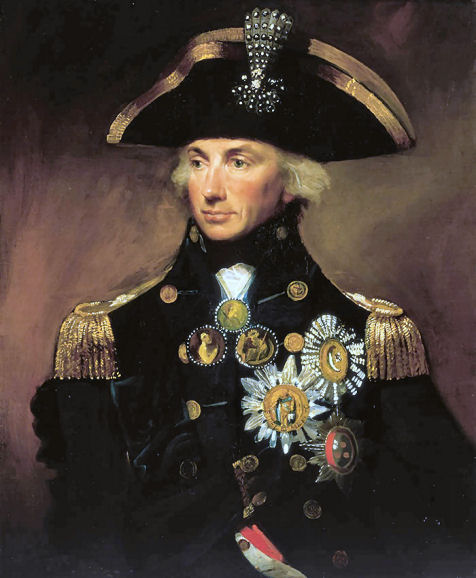
Lord Horatio Nelson
For several decades now, I've been a student, observer and participator in strategy (corporate, branding and marketing) and organization - getting these right is, of course, critical to success. But I've seen many cases where carefully prepared plans and their support structures have not resulted in the desired results.

Reading To Rule the Waves, a gripping history by Arthur Herman, I was struck by the role communications played in two Royal Navy engagements, 25 years apart, each of immense strategic consequences: Yorktown in 1781 and Trafalgar in 1805.
Communications dictated the outcome of each, one a failure that lost a continent and one a victory that established naval pre-eminence for more than a century. The lesson: everyone in the organization must understand what needs to be done for a plan to be successfully executed.
Trapped by the French fleet

Yorktown

In late 1781, "a British army under General Cornwallis had been driven back across Virginia to Yorktown at the mouth of the James River. A French squadron of 26 ships of the line under Admiral de Grasse had cut off Cornwallis. The North American [British] squadron under its new commander Thomas Graves had come down into the Chesapeake Bay to drive de Grasse away; at Virginia's Cape Henry the fleets joined battle on September 5."

It was a fight the British should have won. Grave's subordinate, Samuel Hood, wrote to [Lord] Sandwich, 'Yesterday the British fleet had a rich and most delightful harvest of glory presented to it, but omitted to gather it." Instead, a confusion of signals (Graves had run up the signal for close action at the same time as the flag for keeping the line of battle), and de Grasses's skill in avoiding a more decisive engagement cost Graves the battle and sent him back to New York. By the time he returned, Cornwallis had surrendered. The American War of Independence had been won and lost."

Within a decade, however, the British Navy would introduce a new communications system so revolutionary that it would change the way naval battles were fought, and result in a victory so decisive that Britain would would dominate the world's oceans for over a century.

Historically, admirals could communicate with their captains by the placement and color of flags raised and lowered from the flagship's (hence the name...) masts. Unfortunately, the captains couldn't communicate back and, worse, the admiral couldn't change plans in the heat of the battle. That changed in 1790, when

Richard Howe introduced a new numerical system for signalling his captains, with 10 flags of standard pattern and color (the basis of the International Code of signals still used by ships today). They could now be used in combination to form more than 260 separate messages, from the admiral to his ships but also now from his ships to the admiral. There was even a signal for telling the admiral his signal had been seen and understood, resolving a confusion that had plagued every naval commander since the Spanish Armada - and which had lost Britain the battle of the Chesapeake, and the American Revolution.

Trafalgar

The Treaty of Amiens, signed in 1802, had two results: it ended the the hostilities between France and Britain during the French revolutionary war and, more importantly, made Napolean the military master of the continent of Europe. Only Britain stood in the way of his perceived destiny.

So when, inevitably, war with Britain resumed in May 1803 (the pretext was Britain's refusal to evacuate Malta as promised), Napolean focused his energies on the achievement that had eluded everyone since William the Conqueror: the invasion and defeat of Britain...Like Philip II two centuries earlier, he summoned all the resources of his continental empire. Napolean assembled at Boulogne the battle-hardend veterans of a dozen campaigns into a force of 160,000 men, which he dubbed the Grand Army. He poured over maps and chose the location for his beachhead lading: the northeast coast between Deal and Ramsgate, where his invasion force could anchor in the Downs in the shelter of the Goodwin Sands. He had his engineers design special boats that could get across the Channel in a dead calm.

HMS Victory at Trafalgar
The only obstacle was the Royal Navy, and in particular the Mediterranean fleet under the command of Horatio Nelson, and his flagship, Victory, which would become the most famous man-of-war in British history.  His goal was "'to keep the French fleet in check, and if they out to see, annihilate him.' To do this, Nelson would use a new kind of blockade, not close but loose - so loose, in fact, that it might tempt the French to break out and then fall into his trap. He had a tool to help him: the new navy signals." By 1799 the Admiralty had adopted and expanded the system to more than 340 messages, giving an admiral unprecedented tactical control.

Over the next two years, British and French naval forces played a game of cat and mouse in the Mediterranean, Atlantic and Caribbean, each trying to gain an advantage that would seriously cripple the other. In September 1805, Admiral Pierre de Villeneuve, commander of Napolean's fleet, was preparing to go to sea from Cadiz, Spain to try to secure the English Channel when an order arrived from Napolean: his enemies were gathering in central Europe and the fleet now needed to return to the Mediterranean to land troops and supplies in Naples. As the French fleet set sail on October 19,

The [British] frigate Sirius was the first to spot them. It immediately sent the news on to Blackwood's Eurylalus [using 26 flags: 'To Eurayalus: Enemy have their topsails hoisted.'...which] relayed the message on to the next frigate, the Phoebe, and so on until it reached the Mars 48 miles away. Lt. William Cumby of the Bellerophon then caught the Mars signal; his captain was planning to dine with Nelson on the Victory that very morning. Now Captain Cooke had more exciting news to pass on to his commander in chief: the French were coming.

Two days later, the enemy fleets engaged and the British won a decisive victory that, in their minds, buried any chance of Napolean's invasion of England, even though it was later learned that he had called off the invasion. However, the victory did ensure that Britain would remain unchallenged as it established control of the oceans for the better part of the next century. While tactics, bravery and luck - good and bad: Nelson lost his life - played an important role, as in any armed conflict, the ability of the British fleet to act swiftly on intelligence that would not have been able to be communicated a decade before was crucial.